

Unless you run and wholly own your business there will be a person or persons for which you need to report, your boss(es). This might be a board of trustees, shareholders, governors etc. in short (nearly) everyone has a boss. How can you influence the culture in your team when you aren’t occupying the leadership position? How can you become a force for good culture when working for a bad leader or within a team with poor or even toxic culture? Become a Force Multiplier1 by bringing to bear your:
- Positivity;
- Enthusiasm;
- Humour, and
- Kindness
Force Multiplier – a capability that, when added to and employed by a combat force, significantly increases the combat potential of that force and thus enhances the probability of successful mission accomplishment.
(JP 3-05.1) (US DoD)
Naval examples include asymmetric warfare methods like offensive mine warfare – if I lay an improvised $1000 mine in a narrow strait, or even tell you I have, then you are less likely to drive your billion-dollar warship through that strait. For $1000 I have given you something serious to think about.
If I sail my Submarine, you don’t know where it is, so need to honour that threat and work on the assumption it could be in your vicinity. The threat of my Submarine will occupy your thoughts, limit your operations and tie up some of your assets. My Submarine could be everywhere and anywhere, maybe even sat on the sea bed 1 nm off the coast of its home port with the crew eating hot dogs and watching reruns of Seinfeld.
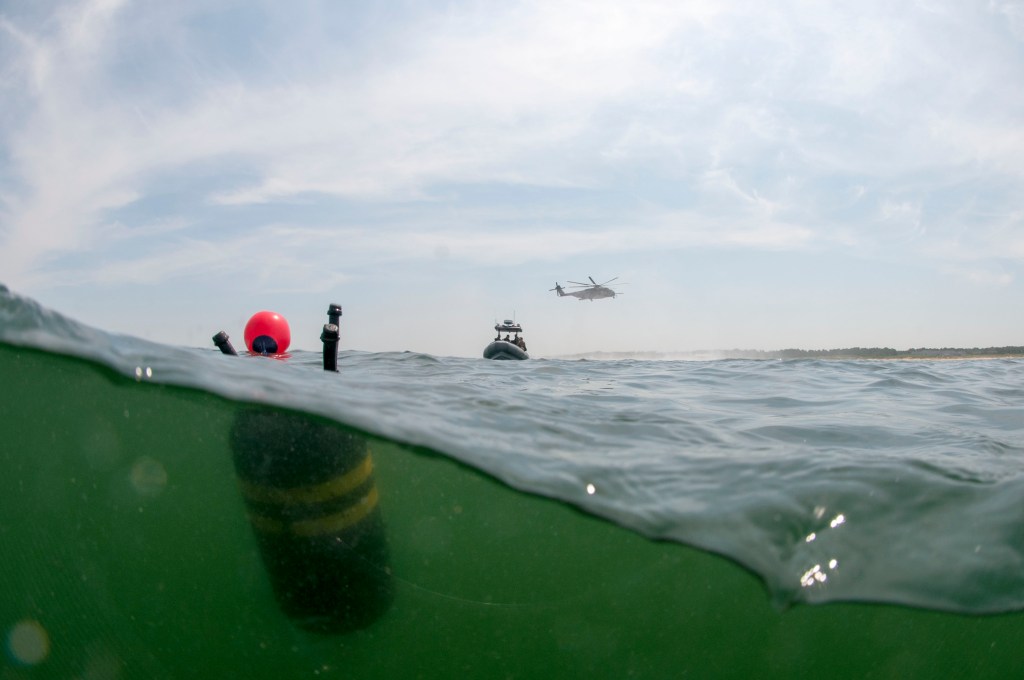
Force Multiplication is, in my interpretation of its meaning, greatly amplifying the impact of a person, persons or thing. It is the way that Iceland (population 330,000, National Sports: Body Wrestling and Handball) defeated England (56,000,000, Football) in the European Football Championships. Not a single player from the Iceland Team would have been considered good enough for the English team yet their tactics, hard work, belief and team spirit triumphed over the greater talent of the English.
The Force Multiplier
I first heard the term Force Multiplier applied to an individual when discussing the disproportionate positive impact a particular person had on the culture, esprit de corps (morale) and happiness of the ships company. It was a lovely compliment and its truth resulted in my picking apart how one person could have such a huge impact on a ship of over 500 crew. Here are the attributes they used to amp up their impact onboard:
Positivity
No one follows a pessimist, and cheerfulness is a choice2. It has long been understood to influence happiness at work and therefore productivity3 . “The cheerful leader in any environment broadcasts confidence and capability, and the Royal Navy instinctively understands this. It is the captain, invariably, who sets the mood of a vessel; a gloomy captain means a gloomy ship. And mood travels fast.”2
Optimism – a disposition expecting the most favourable outcome
Positivity is the attribute I recommend over optimism, it is catching but needs someone to start, it needs patient zero – you.
Clearly in Naval Operations there are times when the battle is hopeless and death or defeat inevitable. This is also true in life and unavoidable poor outcomes or failures a common occurrence in business. Optimism in these situations is clearly inauthentic and damages morale.
Remaining positive and cheerful, however, can be authentic and morale boosting, even in the face of certain failure.
Commodore Richard Farrington, CBE, then Commanding Officer of HMS Nottingham when she ran aground on a rock off Lord Howe Island tells of the humour, positivity and high morale of the sailors trying to save the ship from sinking. He recounted a reluctant junior sailor trainee who was in their first trip away and was unhappy onboard and considering leaving the Navy. He was attempting to stop the ingress of water into a compartment and was up to his chest in water. His supervisor was joking with the sailor saying something along the lines of “pass me up your training competency log and I will sign you off for leak repair” the sailor looks up, laughing and with a huge smile on his face. All this within a ship that had suffered a huge failure and was at serious risk of sinking completely.
“morale remained high” throughout demanding hours of damage control and that “teams were cheerful and enthusiastic,” focusing on their tasks; “sailors commented that the presence, leadership, and good humour of senior officers gave reassurance and confidence”4
Positivity and cheerfulness spreads throughout organisations, and once critical mass is achieved (see Simon Sinek’s discussion on tipping point / Law of Diffusion of Innovation5) culture will change. You can’t make this happen or force it, all you can do is live it yourself and hope to infect others in your team with your contagious positivity and cheerfulness.
Enthusiasm
If you aren’t excited and enthusiastic about your teams goals, you can’t expect anyone else to be engaged and possess an appetite for the endeavour. Be happy to arrive at work and work to find areas of passion within your work and if you can’t, then bring energy and enthusiasm for the mere fact that you are excited by the opportunity to work with your teammates.
Some of my fondest memories (both Naval and Corporate careers) were working on frankly awful projects or operations but the team experience was awesome because we brought energy and enthusiasm to working with each other. The context or work itself was secondary to the experience of working within that team.
I was once tasked with fixing some issues in a clients third party call centres offshore. There were two companies, in two countries doing exactly the same call centre task using exactly the same processes and with the same resources. One call centre had its people heads down, super serious, as quiet as a library, all about the numbers and fear was used to control the staff. There was no enthusiasm or team spirit and the culture and atmosphere was cold and clinical. The other was like walking into a party, loud laughter was everywhere, weird clothes and hats, everyone had silly pseudonyms on their workstations and the energy level was sky-high. The atmosphere was fun and the enthusiasm for the work awesome.

No prizes for guessing which call centre was achieving the better results. The work was mundane and boring, but it was the team experience that made it something different in the second call centre and that was based on an infectious enthusiasm that pervaded throughout the organisation. As I walked through the main area for the first time with the Call Centre Manager he smiled at me as a huge cheer broke out followed by shouting and laughing “we like to have a little fun here” – 100% enthusiasm infection.
Humour
No one gets up in the morning hoping to have an unenjoyable day. Everyone enjoys a laugh – why not laugh more in your workplace? The belief that people having fun at work means that work isn’t getting done is misguided. Your workplace needs to be one that embraces and encourages people to enjoy the experience and have some fun. Humour is the way the Navy culture turns difficult situations on their head and makes work fun.
“Maintaining our unique Naval sense of humour and banter is vital to our ethos and way of life. It helps us face adversity, whether it is physical hardship, fear or uncertainty. It can break tensions, allowing events to be seen in a more balanced perspective. No matter how grim the situation, ‘Jack’ and ‘Royal’ will always see the funny side of it and almost invariably someone will have been in a ‘worse’ situation before.”6

Set out to have fun each day, smile and look to find enjoyment within your team. Make it normal to have a joke, laugh and have a great time. Sharing a laugh is a hugely contagious and positive force for good if it is inclusive and appropriate. A good start might be to invite others to have a laugh at you, self-deprecation is endearing and the mark of a confident person. Get the ball rolling and infect your team with your laughter and humour.
Kindness
It goes without saying that unexpected acts of kindness can have a huge impact on someone struggling or unhappy far beyond the act itself. When was the last time anyone did something selfless and kind for someone in your team? Seeing someone step out of their comfort zone to care for someone else can be contagious as it throws the door open for others to start caring for each other – it makes it ok to cross the line between purely professional endeavours and discussion and caring for one another.
In order to achieve this, it is necessary to know each other beyond the professional and superficial such as ‘how was your weekend’.
This is a gradual process and one that is a delicate balance between healthy interest and a perception of prying or overstepping the line. Take it slow and allow your co-workers to control the pace and depth of the relationship. Seek to share first and allow them to reciprocate if they choose to.
Acts of kindness will allow the team dynamic to move from a group of individuals working to achieve an outcome towards a family of people who put each other’s well-being above the achievement of the immediate aim. Be the first person to show it is ok to care for one another by doing something unprovoked and kind. Take time to spot and act on opportunities to put others well being ahead of your own or the work. Spread your kindness contagion everywhere and maybe there will be a cake for you on your birthday.
Set your virus free
Putting the above into action is simpler if you are occupying the Leadership position as you clearly have the largest influence on team culture. Where you work within a team with a poor example set from above note that the influence of the boss is not all powerful. Team members can through their own shared attitudes and beliefs overwhelm poor culture established from above.
The journey from poor culture to the tipping point for positive culture starts with patient zero, you. Infect everyone with your positivity, enthusiasm, humour and kindness. True leaders will see this and gladly ingest your positive culture virus – this is when you become a Force Multiplier.
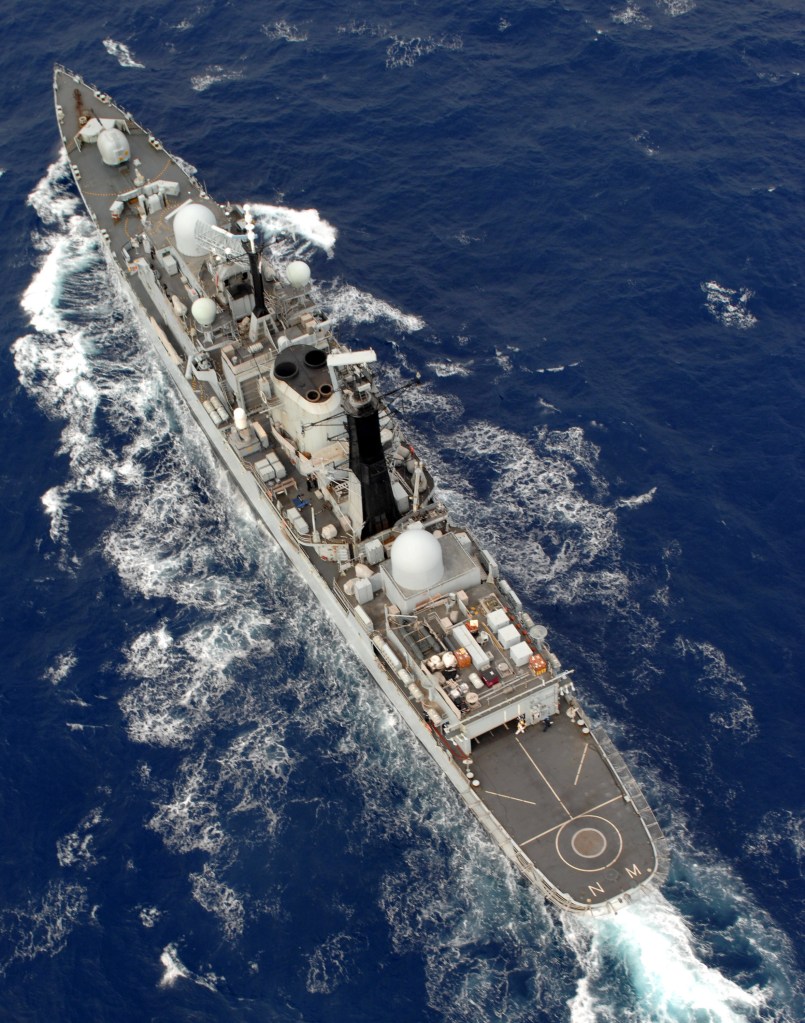
Even if your virus does not take hold you will feel personally better, remember if you are truly pushing water uphill then knowing when to quit is also a positive attribute, good luck patient zero.
As you were.
Dickie
1 If you have a horrible boss, cant connect with your co-workers and do not particularly enjoy the organisation or work itself then you should look to find something that suits you better. This decision in itself should give you a shot in the arm and help you with feeling more positive about your own daily life. Do at least one thing each day to progress this endeavour you will feel better for it!
2 Andrew Oswald, Eugenio Proto, and Daniel Sgroi, “A new happiness equation: Worker + happiness = improved productivity,” Bulletin of the Warwick Economics Research Institute, 2009, Volume 10, Number 3
3 Andrew St. George “Leadership lessons from the Royal Navy”, McKinsey Quarterly Jan 2013
4 Commander-in-Chief Fleet (CINCFLEET), Board of inquiry report into the grounding of HMS Nottingham at Wolf Rock, Lord Howe Island, Australia on 7 July 2002, July 21, 2002
5 Simon Sinek Tipping Point / Law of Diffusion of Innovation https://www.youtube.com/watch?v=2Pekzd9HNcM
6 Royal Navy: Naval Personnel Management June 2016 (version 10) Edition of BR 3 Vol 1

2 Comments.
Good evening 🌝 kindness 🕯️🕯️
[…] arresting the downward spiral to leader dependency you can become the enabler (or force multiplier) for the team, setting the environment and conditions for the team to flourish. Through […]