
Insufficient autonomy, or at worst micro-management, is a critical impediment^ to building the engagement required to achieve sustained organisational success.
^“Seventy-nine percent of survey respondents (see bottom) had experienced micromanagement. Sixty-nine percent said they considered changing jobs because of micromanagement and another 36 percent actually changed jobs”
“Human motivation is largely intrinsic and the aspects of this motivation are divided into: Autonomy, Mastery and Purpose”
Daniel H. Pink ‘Drive: The Surprising Truth About What Motivates Us’
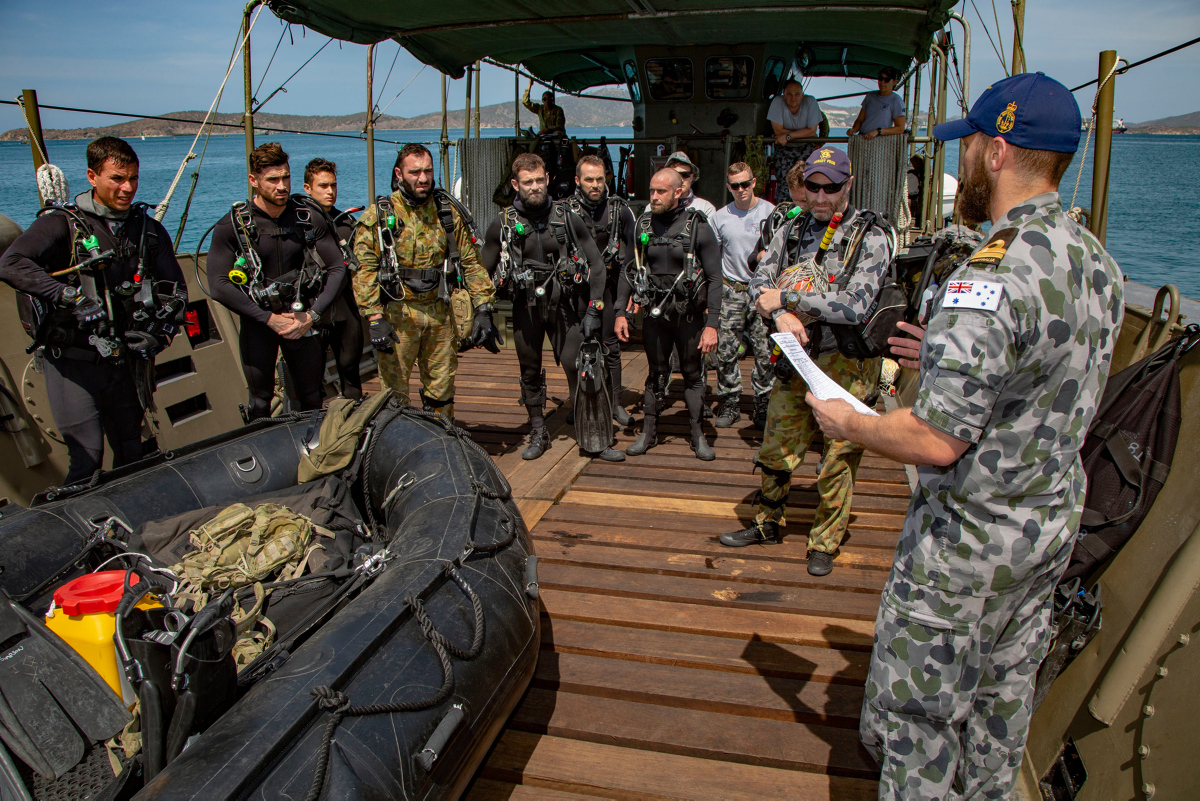
Effective military units, despite common misconceptions, operate less on a Command and Control / Power Leadership Model and more on a Command-by-Veto or a set of clearly understood limits to an individual or team’s authority. These ‘Command Delegations’ free an individual or team to achieve an outcome without becoming prescriptive with the method of achievement. This works from the smallest team to entire Fleets of Ships.
Importantly it also provides the leader (who of course remains responsible) with the comfort that nothing should occur outside of the limits that they have set. Clearly, the broader these limits, the greater the autonomy and therefore engagement. Broad scope will also amplify creative thought ultimately leading to a larger potential return.
“It doesn’t make sense to hire smart people and then tell them what to do. We hire smart people to tell us what to do”
Steve Jobs
Why must military leaders operate in this manner?
The complexity of modern military systems and the pace, uncertainty and risks associated with contemporary operations means an effective military leader cannot afford to get into the weeds. They must trust their team to know their responsibilities (and limits of) and carry out their core duties without undue oversight.
Perhaps counter to general perception an effective Naval Ship at sea is not filled with people giving orders to one another in the way often dramatised in fiction. In my time at sea I never once heard give an instruction suffixed by ‘…and that’s and order!’. People know their jobs, and information and decisions are communicated in an efficient and abbreviated format. So whilst direct and necessarily curt, comms is professional and respectful.
Teams and individuals onboard effective and happy ships are aware of their roles, how these contribute to the larger operation (purpose) and what changes are taking place in the external environment. This means they generally can carry out their duties without orders being needed, all that is required is effective and regular information flow. High-level outcomes are communicated and the team will carry out any ‘implied tasks*’ necessary without needing to seek permission.
* An implied task is an intermediate step without which the final objective cannot be acheived.
A modern warship is a system of systems operated by people. At any time of day or night, whether on operations or not, there will be numerous small teams conducting activities and being lead by junior people. Naval training and qualification leading to professional mastery means these people can (and must) be trusted to carry out the activities within their authority without oversight.
The two key conditions that this autonomy requires are:
- Provision of the training and support to ensure the junior leaders are capable and confident in the tasks they must lead (mastery), and
- Ensuring the team leader or individual understands where their authority ends and so when they need to stop, state their intent (more to come on intent versus asking of permission) to their supervisor and gain concurrence to proceed or receive advice on how to modify their intent as appropriate (autonomy).
Once these conditions are set it is down to the leader to step back and give their team the space to go about their business autonomously and own their outcomes, successes and lessons.
How is this achieved and how can it be applied outside of the military context?
Firstly, individuals or teams need a clear and unambiguous statement of their role, this can and should be high-level to provide flexibility and room for innovation. This isn’t the advert for the role when recruiting an individual and it probably isn’t what was written when agreeing annual goals either (although this might be a great place to reset expectations). It can of course also be a statement of a project or endeavour that is not enduring or it might be the business as usual scope of work.
When an individual cannot clearly describe the purpose of their team and their role and contribution within it, their organisation is not going to achieve the engagement we are seeking.
Secondly, this duty statement (as the Navy refers to it) needs to map directly to the team and organisations goals (purpose). These goals must be ethical and consistent with organisation and societal values. This may require the creation or review of the wider team or organisation’s mission or reason for being. It will include the measures for success and no doubt numerous other things. NOTE: It must not stray into the how or become too detailed. Keep it outcome based and allow your team to be creative.
Thirdly, as long as your team understands the organisation’s culture, values and beliefs you can trust that the methods they choose will be ethical and appropriate. The prudent leader will, of course, trust and verify from time to time to prevent over-zealous, rogue or reckless behaviours. This will give the leader the ‘warm and fuzzy’ feeling that things are going well as ultimately you remain responsible.
Fourthly, your agreed job / team responsibilites must detail the extent of their authority, for example what decisions can be made and at what level or value? What triggers must result in flagging of the situation up the chain? These are your Command Delegations.
The leader should encourage that everything within these delegations be done without needing to communicate up. In fact the leader must positively reinforce this by reminding their direct reports that they are not to be informed of matters within their authority except perhaps within a weekly report or update meeting.
Finally, both parties must fully buy into the agreed role description; the best way of achieving this is, of course, writing it together.
Once this is done take a deep breath and step back. You are now free to focus on mentoring, developing and maintaining the conditions in which your people can thrive – enjoy and celebrate their successes and pick them up when they fall.
That is all, Dickie
^ “Seventy-nine percent of respondents had experienced micromanagement. Approximately 69 percent said they considered changing jobs because of micromanagement and another 36 percent actually changed jobs. Seventy-one percent said being micromanaged interfered with their job performance while 85 percent said their morale was negatively impacted”.
A Survey conducted by Trinity Solutions and discussed in ‘My Way or the Highway’ -by Harry Chambers

3 Comments.
[…] your people are lacking in sufficient delegations and asking permission your business is going to grind to a snail’s pace and opportunities will […]
[…] Lack of initiative within teams becomes the norm over time where the leader accepts or reinforces passive behaviours and a lack of decisiveness, ideas, solutions or ownership. (micro-management is another super-source of these behaviours – read more here) […]
[…] have covered this topic previously as it is something done very effectively within Navy. A simple decision making delegation hierarchy […]