

What’s not to admire about a military leader under real and imminent risk of death acting like they are popping down to the shops to pick up a loaf of bread? Captivating and inspirational stories of calm under fire are told and retold across generations.
How do they do it?
- Go back to basics and do it right, trust your training and experience;
- Do something, even the wrong decision is better than none at all. The wrong decision implemented immediately typically reveals the right decision quickly. Have the confidence to act and be prepared to get it wrong. Indecision and searching for the perfect solution is not the way of the calm operator;
- Get your risk management right. Have a plan for the most dangerous and most likely courses of action;
- War-game how you are planning on reacting to these situations and work on the numerous ‘if this-then that’ scenarios, and
- When something totally unforeseen inevitably happens, think about how you want to behave. Are you going to fire-fight to save the current quarter or put your people first? Putting your people ahead of results is the best way of business and you will come out of the crisis with true loyalty.
Below are some stories of cool heads during crises and some of the methods they employ to maintain their composure under fire.
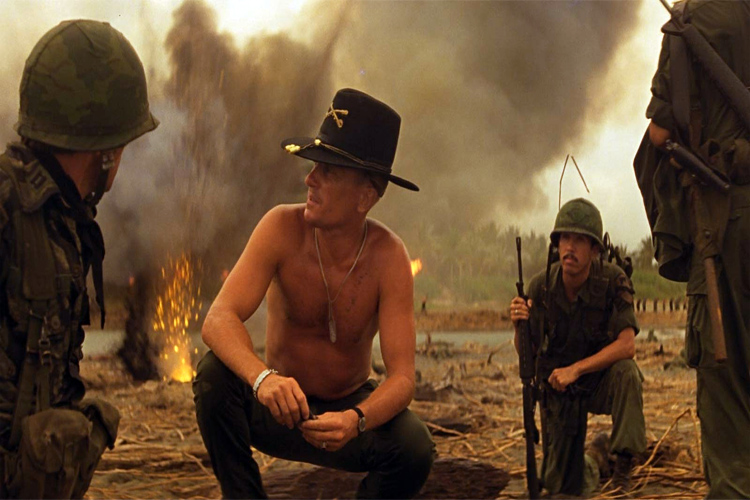
Be calm, confident and optimistic in all situations
Royal Australian Navy Leadership Ethic,
[Be careful not to be falsely optimistic and unrealistic. Positive is the term I prefer over optimistic as it allows us to address the worst case scenario occurring with positivity around our chances of avoiding it or dealing with it if it occurs.]
Remain Calm
In warfare you generally have time to be afraid and this is the time in which the body will fight, take flight or freeze.
Panicking or freezing is the worst possible reaction and militaries, emergency services and organisations like NASA focus on ensuring this does not occur.
When America raced to send the first men into space, they trained the astronauts in one skill more than in any other: the art of not panicking.
When people panic, they make mistakes. They override systems. They disregard procedures, ignore rules. They deviate from the plan. They become unresponsive and stop thinking clearly. At 150 miles above Earth in a spaceship smaller than a VW, this is death. Panic is suicide.
The Obstacle is The Way – Ryan Holiday
Practice and repetition, learning immediate reactions, tactics and processes prepare the military practitioner to revert to their training in times of crisis. They go back to basics. Consider Lt-Cdr Ian Inskip RN.
It is 1982, the Royal Navy had been in decline for many years. With no major conflict in over 35 years the RN was about to undergo huge budget cuts. Argentina then invaded the remote UK outpost of the Falkland Islands. No-one in the Task Group had ever experienced anything like the situation that they were steaming into nor had they experienced any major war-like operations.
Towards the end of the conflict HMS Glamorgan an RN destroyer had been conducting a bombardment mission (firing the main gun (artillery) at shore installations) for many hours and was steaming back out to sea on its completion. The Ship had been fallen out of Action Stations (the highest state of readiness) when the Navigation Officer, Lt-Cdr Ian Inskip – spotted some fast moving ‘paint’ (RADAR Contact) that popped up on the RADAR.

^Lt-Cdr Ian Inskip
Having not switched off to the threat that still existed he quickly realised that the contact must be an MM38 Exocet missile fired from ashore. Showing supreme presence of mind and calm composure he immediately acted ordering the helmsman to turn the ship away to ensure the missile would hit in a glancing blow and not impact a main missile magazine.
Understanding the threat posed the helmsman was panicking and not focusing on the job at hand. They turned in the wrong direction, something that is a very very rare occurrence and no doubt attributable to their panicked reaction to the life and death situation.
In his calm Inskip was trusting his training and doing the basics right he checked the rudder angle indicator immediately after giving the helm order. Quickly noticing the Helmsman’s error he was able to correct it promptly.
Meanwhile, the Operations Room (responsible for defence of the ship against missile threats) had failed to react to the incoming missile so he provided direction and counted down the time to impact. In their lack of composure they failed to fire the chaff which was a key component of the anti-ship missile defence and the missile impacted Glamorgan.
Inskip’s calm and composed decision making ensured the impact was indeed not as serious as it could have been and whilst many lost their lives the ship was saved, making it the first RN ship to survive an Exocet hit.
He immediately fell back on his training, followed the basic processes he had practiced thousands of times and focused on what he could control. He took action and made a decision unlike those that froze around him. He did not let the outcome (life or death) consume him nor the what-ifs and certainly not on things outside his control.
Ignore the outside noise and control only that which you can control
Tom Brady (The most Successful NFL Quarterback in history)
War Game your risk management plans
At a minimum revisit the major risks to your operations and team. Look at the most likely and most dangerous scenarios and war-game them. When war-gaming think about your reactions, decisions and how you want to behave. This gives you the best chance of reacting in the way you want to when the worst case scenario occurs.
Consider Michael Phelps in the 2008 Olympics 200m Butterfly Final. His goggles broke at the beginning of the race meaning he was racing almost blind. This could have induced panic, dismay or resignation of certain defeat in a moment he had devoted his life to.
Not so. During his preparation he assessed all of the potential risks and war-gamed his reactions to them. Phelps was able to remain calm and execute his planned reaction to the known risk of losing his goggles. Amazingly, four lengths later he had set a world record. When asked what it was like to have this happen at the beginning of the race he replied that it was exactly as he had imagined.
I can’t begin to tell you how disorienting that is, to have your goggles fill with water like that, any other mortal would have folded.
Rowdy Gaines – Three time Olympic gold medalist swimmer

What to do when something unforeseen occurs
Where inevitably something occurs that has not been assessed in your risk management planning you won’t have a war-gamed reaction to execute, what to do?
Here is where you earn your money as a leader and a true window into your character will be opened. Treat this as a huge opportunity that seldom presents itself.
Remain calm and composed, recognise and communicate the issue to your team and its full implications. False promises or empty optimism will be seen through, will damage trust and is likely to fuel panic not combat it.
Remind everyone that you are all in it together and together you will work through it. Welcome ideas and input, have the humility to recognise you didn’t foresee the issue. Put the wellbeing of your people first and short term business continuity second. After all organisational results are achieved by the people so focusing on them makes the most sense in the long term.
The confident leader looks long term, not only to this Quarter, and as such retention of your best people is much more important than this Quarter’s results. Simon Sinek’s ‘infinite organisation’ ideas put this best: https://www.youtube.com/watch?v=3SVqbM9Nw7Q
By putting your people first in a crisis you will drive true loyalty. Your people will remember that you stood by them when the shit hit the fan – you can’t buy the kind of loyalty that this will foster and as such the crisis may have had benefits too.
In these turbulent times keep calm and have a cool head, remember hysteria is only acceptable if it’s being played by Def Leppard and panic is only welcome if it’s at the disco.
Now shove a lime wedge in the top of your Corona and go listen to some Def Leppard.
That is all
Dickie
^Ian Inskip: Imperial war museum – https://www.iwm.org.uk/collections/item/object/80013235

